

A comparative analysis of manufacturing processes, infection control, and surgical performance to guide evidence-based clinical selection.
I. Manufacturing Process Differences and Microbiological Safety
The distinction between washed (pre-washed) and non-washed abdominal gauze pads lies primarily in post-weaving processing. The washing process is designed to remove impurities such as sizing agents, waxes, and residual fibers, while also reducing microbial contamination. According to the provided data , washing effectively eliminates Pyronema domestica, a heat-resistant fungal organism whose spores can survive ethylene oxide sterilization and compromise sterilization efficacy.
From an infection control perspective, this is clinically significant. Residual spores may lead to incomplete sterilization of cotton-based medical products, increasing the risk of postoperative infections. Furthermore, airborne spores can trigger respiratory irritation or infections, particularly in immunocompromised patients. Therefore, pre-washed gauze pads provide a higher level of microbiological safety, aligning with modern hospital infection prevention standards.
II. Absorption Performance and Surgical Efficiency
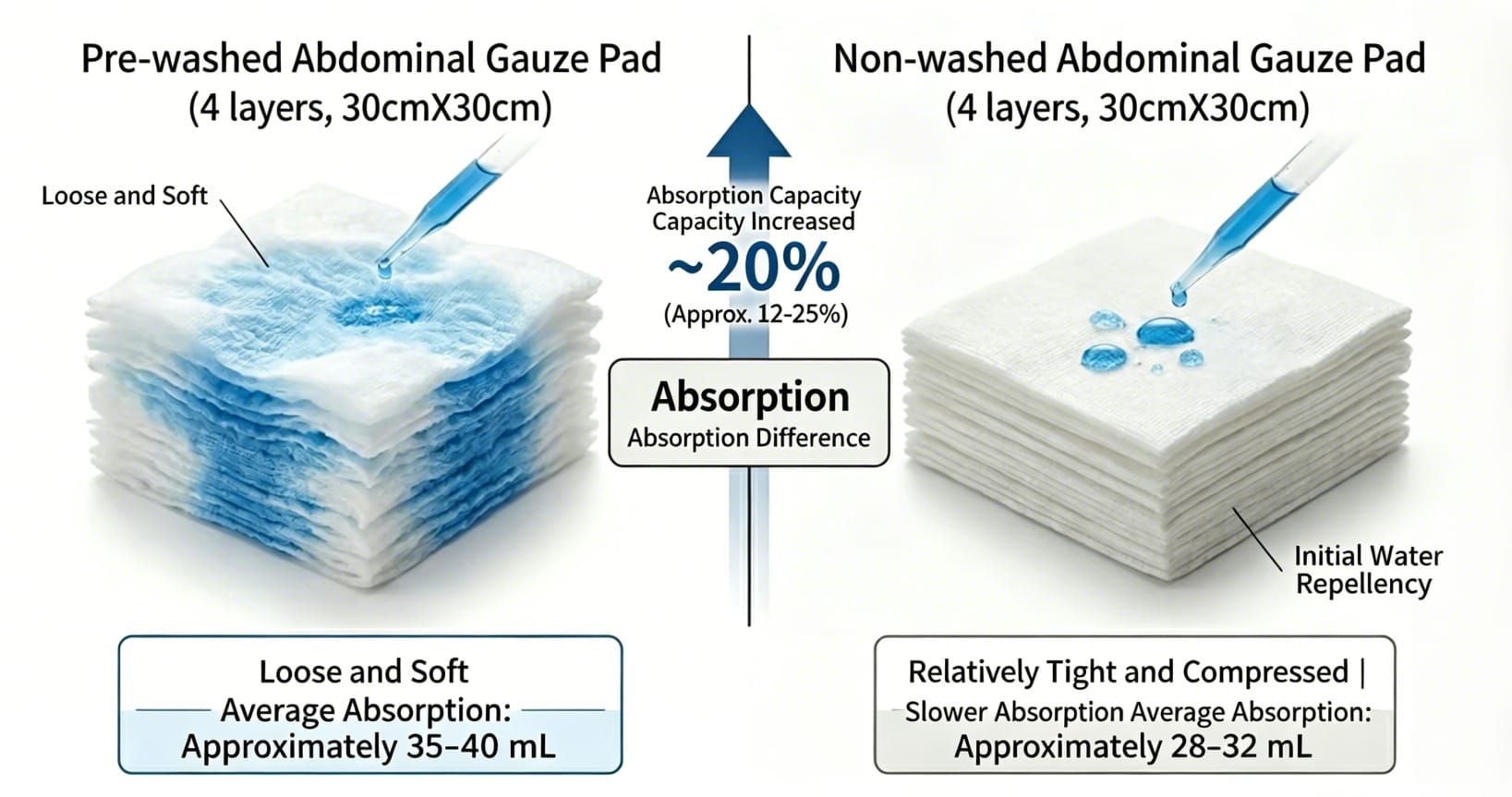
Absorption capacity is a critical performance indicator for abdominal gauze pads, especially in procedures involving significant रक्त loss or exudate management. Evidence from cotton-based medical product testing shows that pre-washed gauze pads demonstrate a 12%–25% increase in absorption capacity compared to non-washed alternatives .
This improvement is attributed to the removal of hydrophobic substances (e.g., wax and sizing agents) during washing, which enhances capillary action and increases fiber porosity. For example, a standard 30 cm × 30 cm, four-ply abdominal pad exhibits:
- Washed: approximately 35–40 mL absorption
- Non-washed: approximately 28–32 mL absorption
In clinical practice, this translates to fewer gauze replacements during surgery, reduced operative interruptions, and lower cumulative exposure to potential contaminants. Conversely, non-washed gauze may exhibit an initial hydrophobic effect, delaying fluid uptake and potentially impacting surgical field visibility.
III. Material Properties: Softness, Conformability, and Tissue Protection
The washing process also enhances the physical characteristics of gauze pads. By removing residual processing chemicals and achieving pre-shrinkage, the fibers become more pliable and uniformly distributed. This results in improved softness and conformability, which are essential for delicate tissue handling.
In surgeries involving sensitive anatomical structures—such as abdominal, gynecological, or neurosurgical procedures—softer materials reduce mechanical irritation and minimize the risk of tissue trauma. Non-washed gauze, in contrast, may feel stiffer due to retained residues, potentially compromising patient safety in high-precision surgical environments.
IV. Clinical Application Scenarios and Selection Strategy
The choice between washed and non-washed abdominal gauze pads should be guided by procedural requirements, patient condition, and cost considerations.
Washed gauze pads are recommended for:
- High-blood-loss surgeries (e.g., abdominal, trauma, cardiovascular procedures)
- Procedures involving immunocompromised patients
- Surgeries requiring prolonged exposure and high fluid management efficiency
- Settings with stringent infection control protocols (e.g., tertiary hospitals, surgical centers)
Non-washed gauze pads may be suitable for:
- Minor surgical procedures with limited fluid exposure
- Short-duration interventions
- Cost-sensitive healthcare settings with controlled risk environments
This stratified approach allows healthcare providers to balance clinical performance with economic efficiency, optimizing resource utilization without compromising patient safety.
V. Industry Challenges and Future Development Trends
A key challenge in the medical consumables industry is balancing manufacturing cost with clinical performance. While pre-washed gauze offers superior safety and functionality, it involves additional processing steps, increasing production costs. However, with growing emphasis on infection prevention and surgical quality metrics, demand for high-performance materials is rising.
Recent trends indicate increased adoption of standardized pre-treatment processes and stricter regulatory requirements for sterilization assurance levels (SAL). According to recent guidelines from international infection control bodies (e.g., WHO and CDC updates in 2023–2025), minimizing bioburden prior to sterilization is critical for achieving consistent sterilization outcomes.
Future innovations may focus on:
- Advanced fiber treatments to enhance absorption without extensive washing
- Antimicrobial coatings integrated into gauze संरcture
- Sustainable processing methods to reduce environmental impact
Conclusion
Washed abdominal gauze pads demonstrate clear advantages in microbiological safety, absorption efficiency, and material performance, making them the preferred choice for most moderate-to-high-risk surgical applications. Non-washed gauze remains relevant in low-risk, cost-sensitive scenarios but presents limitations in fluid management and infection control. A clinically informed selection strategy—based on surgical complexity, patient risk profile, and institutional standards—is essential to optimize outcomes and ensure patient safety.