

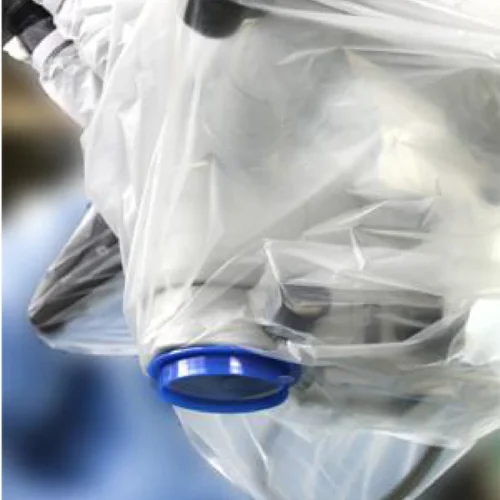
Why Strategic Standardization on a Validated Surgical Microscope Drapes System Enhances Optics, Workflow Efficiency, and B2B Sourcing Accuracy
1. The Critical Imperative of Surgical Microscope Drapes in Hospital Infection Control Architecture
In contemporary microsurgery, the surgical microscope serves as an indispensable extension of the surgeon’s eyes, enabling intricate interventions across delicate anatomical structures. However, these multi-million dollar capital assets are highly complex instruments with articulated arms, cooling fans, and intricate surfaces that cannot be sterilized using conventional autoclaving or aggressive liquid chemical submersion. This structural limitation creates a significant vector for cross-contamination in the operating room. Utilizing premium surgical microscope drapes establishes an absolute, reliable mechanical barrier between the non-sterile equipment housing and the strictly maintained sterile field. From an infection control perspective, an effective barrier must completely isolate the entire chassis, including the suspension arms and control interfaces, without compromising heat dissipation or machine mobility. By implementing high-grade physical drapes, healthcare facilities can maintain strict alignment with global acute care hygiene standards while protecting sensitive electronic components from damage caused by repeated exposure to corrosive disinfectants.
2. Evaluating Cost-Effective Compatibility Alternatives for the High-Demand Zeiss Microscope Drape Market
Hospital procurement teams face continuous pressure to balance rigid budget constraints with uncompromised clinical quality. Within the microsurgical landscape, Carl Zeiss systems hold an extensive global market share, particularly across high-volume multidisciplinary operating suites. Consequently, maintaining an interrupted supply of a dedicated zeiss microscope drape variant is a frequent operational priority for purchasing managers. While sourcing original equipment manufacturer (OEM) consumables provides predictable compatibility, it often carries a substantial financial premium that inflates the per-procedure cost structure. High-performance, medical-grade third-party drapes present a highly efficient alternative. These specialized covers are precision-engineered to perfectly match the specific housing dimensions, focal distances, and multi-lens optical configurations of prominent systems like the OPMI or Pentero series. Opting for a premium third-party alternative allows healthcare networks to optimize their medical consumables budget while ensuring that operating room personnel experience identical tactile feedback, a secure fit, and reliable barrier performance during high-stakes interventions.
3. Meeting the Stringent Technical and Optical Demands of a Specialized Neuro Microscope Drape
The rigorous nature of neurosurgery introduces unique mechanical and environmental challenges that standard medical covers cannot adequately address. During extended craniotomies or deep tissue spinal interventions, a dedicated neuro microscope drape must maintain absolute structural integrity under continuous manipulation for six to twelve consecutive hours. A premature tear or micro-perforation in the material mid-procedure represents an immediate clinical crisis, necessitating the suspension of the operation to replace the drape and re-establish the sterile field. Furthermore, neurosurgical applications demand unparalleled optical clarity. Premium drapes designed for this specialty integrate advanced, scratch-resistant glass or optical-grade polycarbonate lenses directly into the ocular housings. These specialized lenses feature anti-reflective coatings that match the refractive index of the microscope’s underlying optics, effectively preventing ghost images, light scattering, or chromatic aberration. This ensures that the surgical team retains maximum contrast and depth perception when working alongside critical vascular networks and neural pathways.
4. Standardized Operating Room Protocols: How to Drape a Surgical Microscope while Maintaining Sterile Field Integrity
[Microscope Setup View]
       ⬇
[Step 1: Apply Objective Lens Cover] (Secure lens ring first)
       ⬇
[Step 2: Unfurl Main Body Cover] (Accordion fold expands backward)
       ⬇
[Step 3: Secure Articulated Arms] (Apply fixation straps loosely)
Establishing a reproducible, error-free setup protocol is essential for minimizing turnover times and safeguarding patient safety in high-throughput surgical departments. Training perioperative nursing staff on exactly how to drape a surgical microscope requires an established, team-oriented workflow. In practice, this procedure is most safely performed using a two-person technique involving a sterile scrub nurse and a non-sterile circulating nurse. The process initiates with the non-sterile circulator positioning the microscope arm over a spacious area away from the primary sterile field. The sterile scrub nurse, holding the accordion-folded drape from the interior sterile surface, applies the integrated optical housing directly onto the microscope objective lens until it clicks securely into place. While the scrub nurse carefully extends the drape backward over the articulated arm assembly, the circulating nurse pulls the unsterile interior backing downward toward the base, ensuring the material never touches the outer sterile surface. Once fully extended, medical-grade fixation straps are adjusted around the joints to eliminate excess bulk and prevent the drape from obstructing the surgeon’s line of sight or mechanical movement.
5. Technical Specifications, Material Science, and Mechanical Testing of Advanced Polymer Sheaths
The operational safety of a surgical cover depends fundamentally on the material science underlying its construction. Historical reliance on simple polyethylene films has largely transitioned toward advanced, multi-layered polyolefin blends and high-performance polyurethanes. These modern polymers are engineered to deliver an optimal balance of high tensile strength, exceptional puncture resistance, and superior tactile flexibility. In contrast to low-cost alternatives, high-quality materials exhibit a low-glare matte finish that minimizes ambient operating room light reflections, which can cause significant visual fatigue for the surgical team over extended periods. Furthermore, these advanced materials undergo rigorous hydrostatic pressure testing to guarantee absolute viral penetration resistance against bloodborne pathogens. From an operational perspective, the physical suppleness of the polymer prevents the material from rustling or creating distracting acoustic noise during micro-adjustments of the microscope arm, ensuring a focused and calm environment within the operating theatre.
6. Streamlining International Logistics and B2B Sourcing via the Microscope Drape HS Code Framework
For global medical device distributors, international procurement managers, and import-export agencies, operational efficiency extends far beyond clinical utility into the realm of customs compliance and supply chain predictability. When coordinating high-volume international shipments of these technical consumables, verifying the correct microscope drape hs code is vital for avoiding costly border delays, misclassified tariff rates, or unexpected regulatory audits. Typically, these products are classified under Chapter 39 for plastic articles or Chapter 90 for medical and surgical instruments and accessories, depending on the specific integration of optical glass components within the assembly. Utilizing the precise Harmonized System code ensures that customs authorities process the consignment accurately, preventing supply chain disruptions that could leave contracted hospitals facing critical stockouts. Partnering with an experienced manufacturer that proactively provides clear, standardized customs documentation, international compliance certifications (such as CE and FDA), and transparent logistics encoding allows global B2B buyers to accelerate customs clearance and optimize their total landed cost structure.
📚 References
- Association of periOperative Registered Nurses (AORN): Guidelines for Perioperative Practice: Sterile Field Maintenance and Device Draping Protocols.
- World Health Organization (WHO): Decontamination and Reprocessing of Medical Devices for Health-care Facilities: Core Principles of Barrier Protection.
- Centers for Disease Control and Prevention (CDC): Guideline for Environmental Infection Control in Health-Care Facilities, Section on Surgical Assets.
- World Customs Organization (WCO): Harmonized Commodity Description and Coding System, Technical Classification for Medical Consumables.