
Understanding how silicone nasal splints support structural stability, reduce adhesion risk, and improve postoperative recovery across rhinoplasty, septoplasty, and nasal fracture repair
1. Post-Rhinoplasty Stabilization: Controlling Implant Position and Soft Tissue Memory
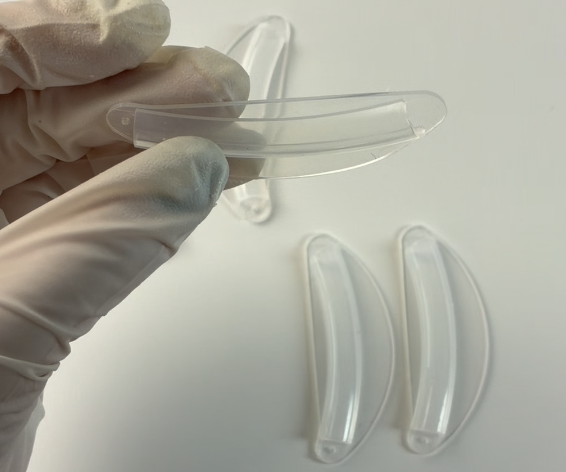
Silicone nasal splints are widely used after augmentation rhinoplasty and structural nasal reshaping procedures to maintain postoperative alignment. In cases involving silicone implants or expanded polytetrafluoroethylene (ePTFE) materials, the early healing phase is characterized by soft tissue swelling and weak internal fixation.
The splint acts as an external stabilizing interface, reducing micro-movements that may lead to implant rotation or subtle displacement. This is particularly relevant in the first postoperative week, when fibrous adhesion has not yet matured. Clinical experience in facial plastic surgery suggests that external stabilization during this period can support more predictable dorsal contour outcomes and reduce revision risk associated with early structural instability.
Wear duration commonly ranges from 3–7 days in primary augmentation cases, while complex rhinoplasty procedures involving cartilage grafting may require 10–14 days of stabilization depending on intraoperative findings and surgeon protocol.
2. Septoplasty Support and Synechiae Prevention: Protecting the Midline Nasal Framework
Septoplasty procedures often require internal support to maintain septal alignment and prevent mucosal flap collapse. Silicone nasal splints function as internal scaffolding devices that stabilize the reconstructed septum while minimizing direct mucosal contact trauma.
A key clinical objective is prevention of nasal synechiae (intrapostoperative adhesions between septum and lateral nasal wall). Compared with traditional gauze packing, silicone splints are associated in multiple ENT practice observations with reduced postoperative discomfort, improved airway patency, and lower incidence of pressure-related mucosal injury.
Evidence from otolaryngology literature (including comparative studies in peer-reviewed ENT journals indexed in PubMed/NIH databases) indicates that splint-based approaches may improve patient tolerance and facilitate earlier postoperative breathing recovery, especially in outpatient septoplasty pathways where early discharge is prioritized.
3. Nasal Bone Fracture and Structural Realignment: Maintaining Osteocartilaginous Positioning
In nasal bone fracture reduction, postoperative instability remains a primary concern during early bone remodeling. Silicone nasal splints are frequently used as external fixation adjuncts after closed reduction or osteotomy-based correction.
The mechanical role is not rigid immobilization but controlled limitation of lateral displacement during the early consolidation phase. Depending on fracture complexity and periosteal disruption, wear time may extend from 2 to 4 weeks.
In more complex trauma cases involving comminuted fractures or combined septorhinoplasty, splinting becomes part of a broader stabilization strategy that may include internal supports, external thermoplastic splints, and controlled nasal packing protocols.
4. Complex Rhinoplasty and Revision Surgery: Supporting Multi-Vector Reconstruction
Revision rhinoplasty and structural reconstruction cases often involve compromised cartilage integrity, scar tissue formation, and altered vascular supply. Silicone nasal splints in these scenarios serve as a stabilizing interface that distributes external pressure more evenly across the nasal dorsum and sidewalls.
When rib cartilage grafting or septal reconstruction is performed, maintaining geometric stability during the early remodeling phase is critical. Surgeons may extend splint duration to 10–14 days depending on graft complexity and tissue resilience.
Clinical practice trends show that in revision settings, splints are less about cosmetic contour preservation and more about biomechanical stabilization of reconstructed nasal frameworks.
5. Postoperative Care, Infection Control, and Patient Compliance Considerations
Proper postoperative management significantly influences splint effectiveness. Fit and pressure balance are essential; excessive compression may impair local microcirculation, while insufficient contact reduces stabilization efficiency.
Standard care protocols emphasize keeping the splint dry and maintaining peri-nasal hygiene using sterile saline-based cleansing techniques. Nasal irrigation with isotonic saline solutions is commonly recommended multiple times per day to reduce mucus accumulation and lower the risk of crusting.
From an infection prevention perspective, silicone materials offer a non-absorbent surface that reduces bacterial retention compared to porous packing materials, aligning with general infection control principles in ENT postoperative care environments.
References
- American Academy of Otolaryngology–Head and Neck Surgery (AAO-HNS): Clinical Practice Resources in Septoplasty and Rhinoplasty Care
- National Institutes of Health (NIH), PubMed Central: Studies on nasal packing vs intranasal splints in septoplasty outcomes
- European Archives of Oto-Rhino-Laryngology: Comparative analyses of postoperative nasal stabilization techniques
- Acta Oto-Laryngologica: Clinical outcomes of septal surgery and adhesion prevention strategies
- CDC infection prevention principles for surgical wound care and postoperative device management