

Balancing Clinical Safety with Supply Chain Efficiency When Sourcing Neurosurgical Patties and Neuro Sponges
1. Clinical Mechanisms of Neuro Sponges in Delicate Tissue Management
Neurosurgical operations demand an extraordinary level of fluid control and tissue protection. When working within the tight confines of a craniotomy, a surgeon cannot afford any unnecessary trauma to the delicate cerebral cortex or cranial nerves. This is where high-quality neurosurgical patties become irreplaceable. Unlike standard cotton gausses used in general surgery, specialized surgical patties for neurosurgery are engineered to manage fluids through precise capillary action. They absorb blood and cerebrospinal fluid away from the surgical field without drying out the underlying neural structures.
The underlying material science dictates how well a patty performs under the microscope. Traditional cotton neuro patties provide excellent initial fluid uptake, but they can sometimes leave behind microscopic lint or stick to the drying brain tissue if not properly moistened. To solve this, advanced manufacturers have introduced non-woven synthetic fibers, such as rayon or polyvinyl alcohol (PVA) blends. These newer materials offer a lint-free surface and significantly reduce the risk of tissue adhesion. From a histological standpoint, preventing adhesion is critical because pulling a stuck sponge away from neural tissue can tear microscopic blood vessels, leading to secondary post-operative bleeding or focal neurological deficits.
+------------------+-----------------------------+-----------------------------+
| Characteristic   | Traditional Cotton Patties  | Advanced Synthetic (Rayon)  |
+------------------+-----------------------------+-----------------------------+
| Linting Risk     | Low to Moderate             | Negligible / Lint-Free      |
| Fluid Retention  | Good                        | Superior Capillary Action   |
| Adherence Risk   | Higher if dry               | Hydrophilic / Non-stick     |
+------------------+-----------------------------+-----------------------------+
For hospital procurement teams, understanding these material differences is essential. Buying cheaper, poorly manufactured options might save money upfront but can lead to longer O.R. times due to oozing or structural failure. Premium neuro sponges maintain their structural integrity even when saturated, ensuring that no fibers are left behind to trigger a foreign body granuloma or post-operative infection.
2. Surgical Scenarios and Intraoperative Workflow Efficiency
In the high-stakes environment of an operating room (OR), the utility of neurosurgical patties spans across multiple distinct phases of a procedure. During the initial exposure phase of a tumor resection, larger patties are often placed along the margins of the craniotomy to protect the retracted brain tissue from mechanical trauma. As the surgeon dissects deeper into the subarachnoid space, the demand shifts toward ultra-thin, micro-sized surgical patties for neurosurgery. These micro-patties are frequently used to isolate tiny aneurysms or to cushion cranial nerves during microvascular decompressions.
The workflow of an OR nurse is deeply impacted by the design of these consumables. Every single neuro sponge brought into the sterile field must be tracked with absolute certainty to prevent retained foreign objects. Reliable manufacturers address this crucial safety requirement by permanently bonding a x-ray detectable element—usually a radiopaque barium sulfate thread—and a long, brightly colored locator string to each patty. The locator strings are left hanging outside the surgical incision, allowing the scrub nurse to keep a visual tally during the count.
What we often see in hospitals is that poor string-to-pad bonding can lead to intraoperative detachment, creating a highly stressful situation where the surgical team must halt the procedure to locate a missing piece. Therefore, evaluating the tensile strength of this bond is just as important as evaluating the absorbency of the pad itself. A smooth, uninterrupted workflow directly translates to reduced anesthesia time for the patient, which clinical guidelines consistently correlate with better post-operative outcomes and lower infection rates.
3. Comparing Market Leaders and Emerging Sourcing Alternatives
For decades, western medical device conglomerates have dominated the global neurosurgical consumables market. Brands like Codman (Integra LifeSciences) and Medtronic have set the industry standards with well-known product lines such as Cottonoid and Xomed. These established brands are highly favored by surgical teams due to their historical reliability, predictable thickness, and deep entrenchment in hospital preference cards. Surgeons grow accustomed to the exact tactile feedback of a specific brand, making them resistant to changes that might alter their intraoperative routine.
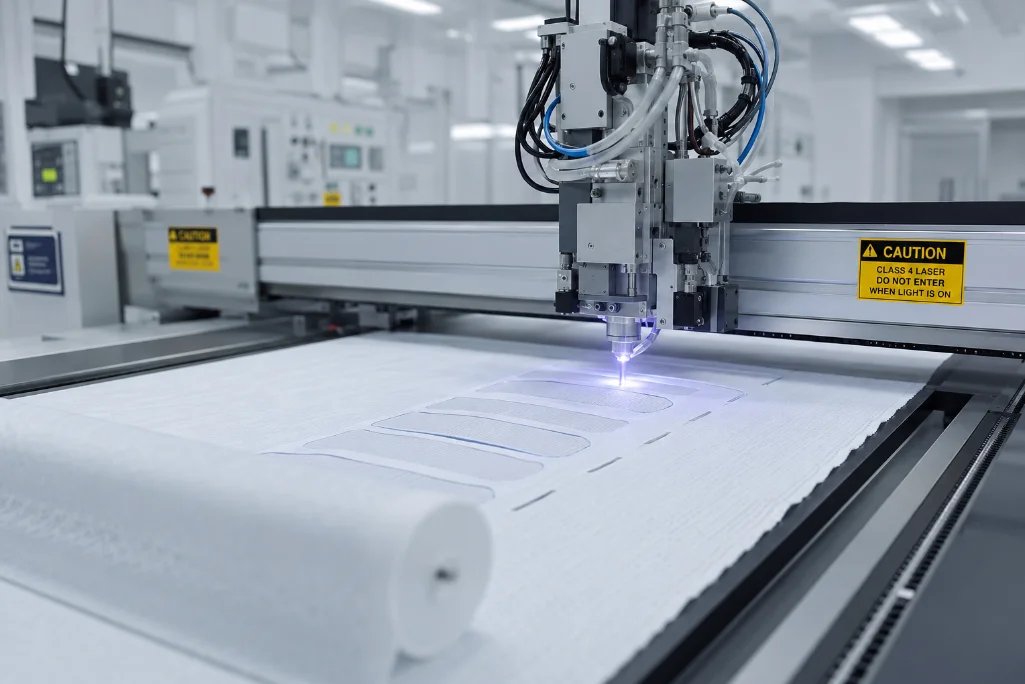
However, the global medical supply chain has shifted significantly, and emerging manufacturers—particularly from advanced medical manufacturing hubs in China—are challenging this duopoly. These new players are producing sterile neurosurgical sponges that match or even exceed western performance metrics at a fraction of the cost. The primary differentiator historically was material consistency; early iterations from alternative suppliers sometimes suffered from irregular thickness or stiff edges. Today, however, many top-tier Chinese manufacturers utilize automated, state-of-the-art needle-punching and laser-cutting technologies that guarantee perfectly smooth edges and uniform fluid distribution.
+----------------------+--------------------------+--------------------------+
| Sourcing Parameter   | Legacy Western Brands    | Emerging Premium China   |
+----------------------+--------------------------+--------------------------+
| Unit Cost            | High Premium             | Highly Competitive       |
| Availability         | Vulnerable to shortages  | Robust / High Capacity   |
| Regulatory Status    | FDA / CE Broadly Held    | FDA / CE Increasingly    |
+----------------------+--------------------------+--------------------------+
When evaluating these alternative sourcing options, procurement managers must look closely at international compliance. A certified supplier should offer documentation demonstrating adherence to ISO 13485 quality management standards, alongside CE marks or FDA clearances. By running side-by-side clinical evaluations in non-critical scenarios, hospitals can verify whether an emerging brand’s cotton neuro patties offer the same tear resistance and wet-state stability as their high-priced legacy counterparts, opening the door to massive budgetary savings without compromising patient safety.
4. Procurement Thinking: Financial Dynamics and Total Cost of Sourcing
From a hospital administration perspective, the procurement of surgical consumables requires a careful balancing act between clinical demands and financial constraints. Neurosurgical patties may seem like minor line items compared to high-ticket capital equipment like surgical microscopes or neuronavigation systems, but their high volume makes them a significant contributor to the annual O.R. budget. A single complex neurosurgical procedure can consume dozens of patties of various sizes, meaning that a few cents of difference per unit can add up to thousands of dollars across a fiscal year.
Smart procurement thinking extends beyond the initial purchase price to consider the total cost of ownership and utilization efficiency. For instance, purchasing patties in pre-packaged, standardized counts (such as packs of 10 or 20) aligned with common procedural archetypes can drastically reduce material waste. If a pack is opened but only half the patties are used, the remaining sterile neurosurgical sponges must be discarded, inflating the true cost per procedure. Furthermore, reliable supply chains mitigate the financial risks associated with backorders. Relying on a single domestic legacy brand leaves a hospital vulnerable to factory shutdowns or shipping delays, whereas qualifying an approved alternative manufacturer ensures continuous supply chain resilience.
+----------------------------+-----------------------------------------------+
| Procurement Optimization   | Direct Impact on Hospital Operations          |
+----------------------------+-----------------------------------------------+
| Pre-sorted Multipacks      | Minimizes clinical waste / lowers unit cost   |
| Multi-vendor Sourcing      | Eliminates supply chain single-point failure  |
| Lint-Free Synthetic Fiber  | Lowers risk of post-op complications/lawsuits |
+----------------------------+-----------------------------------------------+
Moreover, the quality of the packaging itself impacts the hospital’s bottom line. Double-sterile peeling pouches must withstand the rigors of transit and long-term storage without puncturing. A compromised pouch means a compromised sterile barrier, forcing the clinical staff to throw the product away before it ever reaches the patient. High-quality packaging preserves shelf-life and ensures that every dollar spent on inventory translates into usable clinical assets.
5. Infection Control and Strict Biocompatibility Standards
In neurosurgery, the stakes for infection control are exceptionally high. Conditions like post-operative meningitis or deep-seated brain abscesses are catastrophic complications that carry high mortality rates and extend hospital stays by weeks, costing healthcare systems tens of thousands of dollars per occurrence. Because neurosurgical patties come into direct contact with exposed cerebral tissue and vascular networks, their sterility and biocompatibility must be flawless. They must meet stringent international standards, such as those outlined by the World Health Organization (WHO) and local surgical infection societies.
Biocompatibility involves ensuring the material is completely non-pyrogenic and non-toxic. During the manufacturing of cotton neuro patties, raw materials undergo intensive scouring and bleaching processes to remove natural oils, proteins, and chemical residues. If these purification steps are sub-standard, residual chemicals or endotoxins can leach into the cerebrospinal fluid, triggering a severe sterile inflammatory response known as aseptic meningitis. This is why strict quality control tracking from raw fiber to final sterilization is an absolute prerequisite for any manufacturer entering the B2B healthcare supply chain.
Furthermore, the method of sterilization matters. High-quality neurosurgical patties are typically sterilized using either Ethylene Oxide (EtO) gas or Gamma radiation. Both methods are capable of achieving a Sterility Assurance Level (SAL) of 10⁻⁶, meaning there is less than a one-in-a-million chance of a viable microorganism surviving. Procurement teams should require lot-specific sterilization certificates from their suppliers to verify compliance. Ensuring that your supplier adheres to these rigorous standards helps reduce product liability risks and, most importantly, protects patients from preventable healthcare-associated infections.
6. Adherence to Clinical Guidelines and Post-Operative Management
Modern neurosurgical practices are heavily guided by evidence-based clinical protocols established by major authoritative bodies, such as the American Association of Neurological Surgeons (AANS) and the European Association of Neurosurgical Societies (EANS). These guidelines emphasize minimizing mechanical disruption to brain tissue and maintaining strict hemostasis throughout the intraoperative window. The choice and proper handling of neuro sponges play a direct role in achieving these clinical objectives.
During post-operative care, the consequences of intraoperative tissue management become apparent. If a surgeon uses a sub-par patty that leaves lint behind or causes minor micro-tears upon removal, the patient’s post-operative recovery can be hindered by prolonged localized edema or unexpected minor hemorrhages. Clinical evidence suggests that using highly hydrophilic, non-adherent synthetic materials helps maintain a stable microenvironment over the cortex, which is associated with smoother recoveries and shorter stays in the Neuro-ICU.
+-----------------------------+----------------------------------------------+
| Guideline Objective         | Role of Premium Neurosurgical Consumables    |
+-----------------------------+----------------------------------------------+
| Mechanical Tissue Support   | Uniform thickness provides predictable mass  |
| Advanced Hemostasis         | High absorbency allows clear visualization   |
| Foreign Body Prevention     | Validated radiopaque threads prevent retention|
+-----------------------------+----------------------------------------------+
When B2B buyers select a medical device manufacturer, prioritizing partners who align their product design with these evolving clinical guidelines is highly beneficial. A vendor that proactively tests their products for linting levels, surface roughness, and liquid absorption speeds provides the clinical data that hospital value committees need to justify a purchasing shift. Ultimately, when a product seamlessly bridges the gap between strict guideline compliance and cost efficiency, it satisfies both the chief of neurosurgery and the chief financial officer.
📚 References
- American Association of Neurological Surgeons (AANS) Clinical Guidelines: Core recommendations on intraoperative safety, foreign body prevention, and infection control parameters during craniotomy procedures.
- European Association of Neurosurgical Societies (EANS) Standards: Protocols regarding material biocompatibility and the minimization of mechanical trauma to cortical tissue.
- ISO 13485: Medical Devices: Quality management systems requirements for regulatory compliance in the manufacturing of sterile surgical consumables.
- World Health Organization (WHO) Surgical Safety Checklist: International benchmarks for counting and tracking surgical sponges and preventing retained foreign objects in deep cavity surgeries.