

Evaluating structural design, safety performance, and clinical applications in microsurgical environments
Introduction
Neurosurgical cottonoids and traditional surgical cotton pads are both widely used absorbent materials in the operating room. However, their structural design, functional performance, and clinical applications differ significantly. With the increasing precision requirements in neurosurgery and microsurgical procedures, understanding these differences is essential for optimizing surgical outcomes and patient safety.
I. Structural Design and Material Engineering Differences
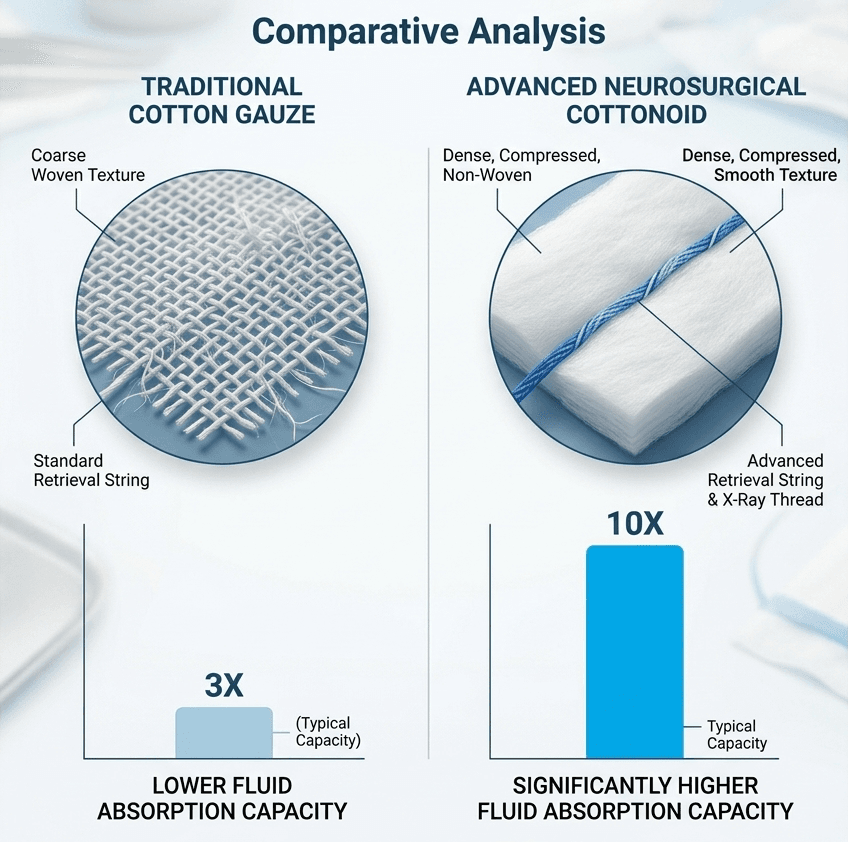
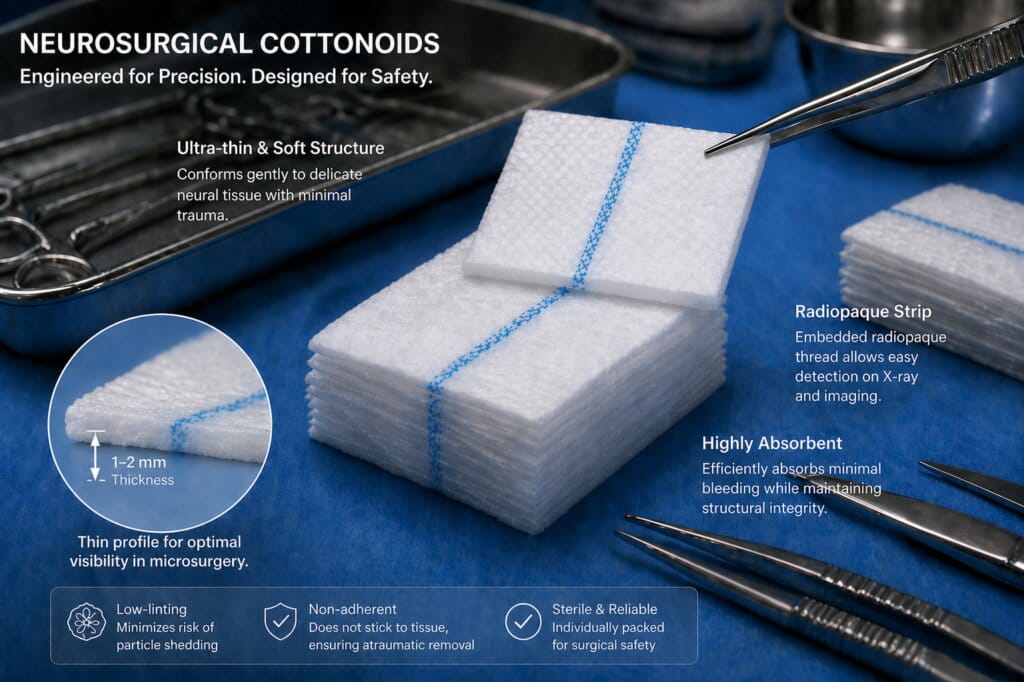
Neurosurgical cottonoids are specifically engineered for delicate microsurgical environments. They are typically made from high-quality, lint-free cotton or synthetic blends, featuring a compact, thin, and uniform structure. Many cottonoids also include reinforced edges and integrated X-ray detectable threads to ensure durability and traceability.
In contrast, traditional cotton pads are designed for general-purpose use. They are usually thicker, less uniform in structure, and may release lint during manipulation. Their lack of structural reinforcement makes them less suitable for precision-based procedures, particularly in confined surgical fields such as intracranial operations.
II. Precision Handling and Surgical Control
In neurosurgery, precision is critical. Cottonoids are designed to be easily manipulated using microsurgical instruments, allowing surgeons to place, reposition, and remove them with high accuracy. Their thin profile enables them to conform closely to neural structures, providing gentle retraction and protection of tissues.
Traditional cotton pads, due to their bulkier structure, are less suitable for fine manipulation. They may obscure the surgical field and reduce visibility, which can increase the risk of inadvertent tissue damage. Therefore, their use is generally limited to external applications or less delicate procedures.
III. Safety Features and Retention Prevention
A key advantage of neurosurgical cottonoids is the inclusion of X-ray detectable markers, which allow for intraoperative or postoperative identification using imaging systems. This significantly reduces the risk of retained surgical items (RSIs), a critical safety concern in surgical practice.
Traditional cotton pads typically lack such detection features, relying solely on manual counting protocols. In complex or lengthy surgeries, this increases the potential for counting discrepancies and associated risks. As a result, cottonoids are preferred in high-risk environments where traceability is essential.
IV. Absorbency and Fluid Management Performance
Both neurosurgical cottonoids and traditional cotton pads offer absorbent capabilities; however, their performance differs based on design. Cottonoids are optimized for controlled absorption, allowing them to manage small volumes of blood or cerebrospinal fluid without oversaturation. This helps maintain a clear surgical field.
Traditional cotton pads are designed for higher absorbency and bulk fluid management, making them suitable for general surgery, wound care, and postoperative applications. However, their higher absorption capacity can lead to rapid saturation, which may be less desirable in microsurgical settings.
V. Clinical Application Scenarios
Neurosurgical cottonoids are primarily used in neurosurgery, ophthalmic surgery, ENT procedures, and other microsurgical disciplines where precision and tissue protection are critical. They are often used to separate structures, absorb minimal fluids, and protect delicate tissues such as the brain or spinal cord.
Traditional cotton pads are more commonly used in general surgery, wound dressing, and external applications. Their versatility and cost-effectiveness make them suitable for routine procedures but limit their applicability in highly specialized surgical environments.
Conclusion
Neurosurgical cottonoids and traditional cotton pads serve distinct roles within surgical practice. While traditional cotton pads provide effective absorbency for general applications, neurosurgical cottonoids offer superior precision, safety, and traceability required for microsurgical procedures. The choice between these materials should be guided by the specific clinical context, with a clear emphasis on patient safety, surgical efficiency, and procedural requirements.