

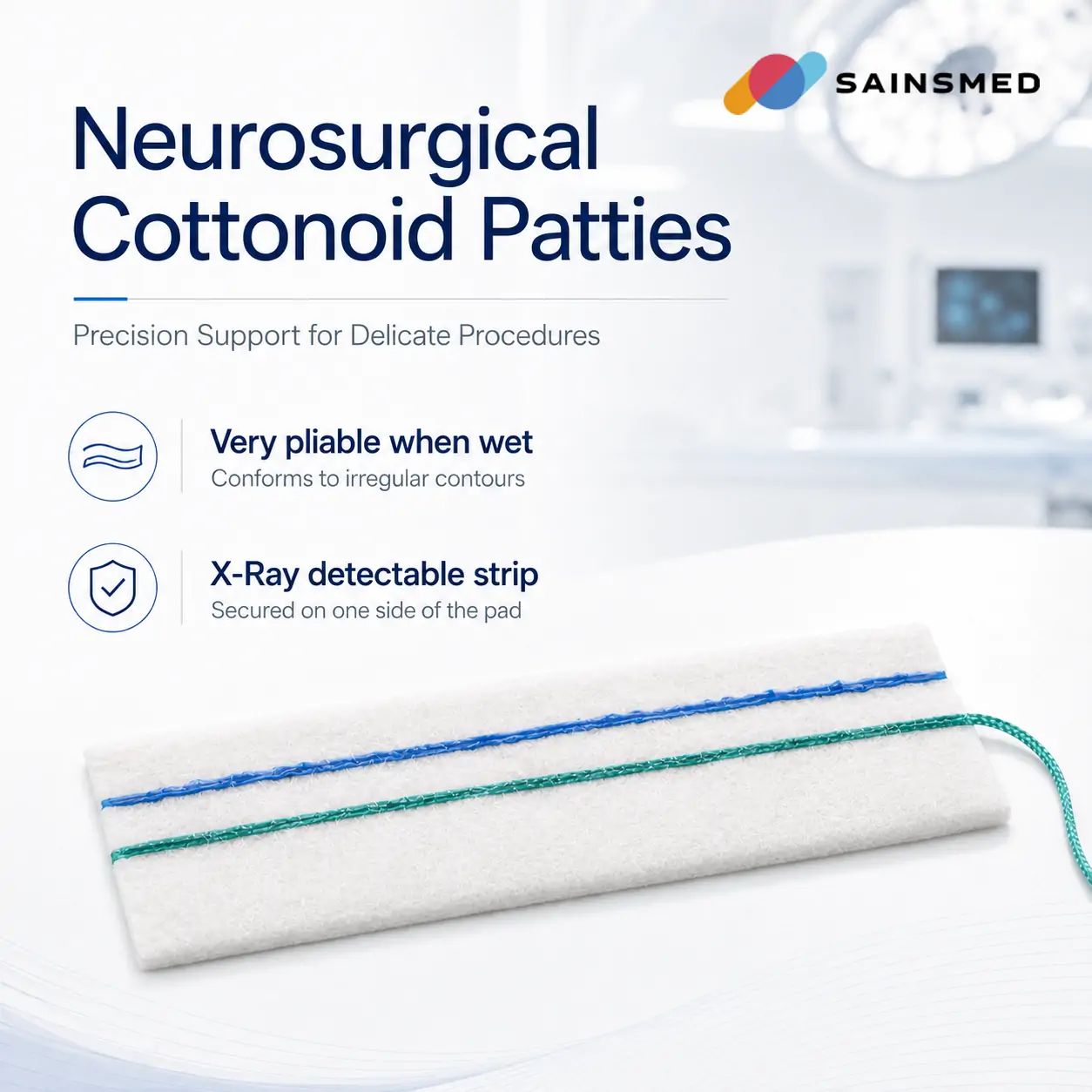
Neurosurgical patties are among the most frequently used disposable consumables in neurosurgery and microsurgery. They help surgeons maintain a clear operative field, protect delicate neural structures, absorb blood and cerebrospinal fluid (CSF), and assist with tissue manipulation during intricate procedures. They are commonly referred to as neurosurgical cottonoids, cottonoids, or neurosurgical sponges.
For distributors, hospitals, and OEM medical device brands, understanding the differences in materials, available sizes, and pricing is essential when selecting a reliable supplier.
What Are Neurosurgical Patties?
Neurosurgical patties are small, soft, highly absorbent surgical pads specifically designed for use around delicate brain tissue, cranial nerves, spinal cord structures, and blood vessels during microsurgical procedures.
Most products include:
- High-absorbency nonwoven material
- Radiopaque thread or marker for X-ray detection
- Retrieval tail or string for easy identification
- Sterile single-use packaging
They are used in:
- Brain surgery
- Spine surgery
- Skull base surgery
- Vascular neurosurgery
- ENT microsurgery
- Other delicate microsurgical procedures
Materials Used in Neurosurgical Patties
The base material significantly influences absorbency, softness, lint generation, and tissue interaction.
| Material | Characteristics | Typical Applications |
|---|---|---|
| Rayon | Soft, low lint, excellent absorbency | Most common commercial neurosurgical patties |
| Cotton | Natural fibers, soft, highly absorbent | Traditional cottonoid products |
| Viscose Nonwoven | Consistent structure, good liquid retention | Modern disposable patties |
| Synthetic Polymer Materials (e.g., PVA) | High absorbency but different tissue interaction characteristics | Selected specialty products |
Rayon
Rayon has become one of the most widely used materials because it provides:
- Excellent fluid absorption
- Lower linting than traditional cotton
- Good flexibility
- Smooth handling under the operating microscope
Cotton
Cotton remains popular in certain markets due to its:
- Natural fiber composition
- Soft texture
- Good absorbency
However, manufacturing quality is important because fiber shedding should be minimized.
Modern Nonwoven Materials
Many manufacturers now use spunlaced or thermally bonded nonwoven fabrics, often based on viscose fibers, to improve:
- Uniformity
- Reduced lint generation
- Easier removal
- Consistent manufacturing quality
Why Material Selection Matters
Since neurosurgical patties come into direct contact with delicate neural tissue, manufacturers carefully evaluate:
- Fiber shedding
- Surface smoothness
- Absorption speed
- Wet strength
- Tissue adherence
- Radiopaque marker integration
Clinical research has shown that different materials may exhibit varying degrees of adhesion to neural tissue, particularly during prolonged placement, making material selection an important design consideration.
Common Uses of Neurosurgical Patties
1. Tissue Protection
The primary purpose is protecting:
- Brain cortex
- Cranial nerves
- Spinal cord
- Blood vessels
from mechanical trauma during surgery.
2. Blood Absorption
Their high absorbency allows rapid removal of blood from the operative field, improving microscopic visibility.
3. CSF Management
They efficiently absorb cerebrospinal fluid, helping maintain a dry surgical environment.
4. Gentle Tissue Retraction
Surgeons often use patties as soft cushions between surgical instruments and delicate anatomy.
5. Microsurgical Dissection
They assist with:
- Vessel separation
- Nerve protection
- Temporary tissue positioning
without causing excessive trauma.
Standard Neurosurgical Patty Sizes
Manufacturers typically offer a wide range of sizes because different procedures require different working spaces.
| Size | Typical Application |
|---|---|
| 5 × 5 mm | Microvascular surgery |
| 10 × 10 mm | Cranial microsurgery |
| 10 × 15 mm | General neurosurgery |
| 15 × 15 mm | Tissue protection |
| 20 × 20 mm | Fluid absorption |
| 20 × 30 mm | Larger operative fields |
| 20 × 50 mm | Spine surgery |
| 25 × 90 mm | Extended surgical exposure |
Many OEM manufacturers can also produce:
- Custom dimensions
- Strip-shaped patties
- Oval patties
- Triangular designs
- Special microsurgical configurations
Radiopaque Thread Options
Most premium neurosurgical patties incorporate a radiopaque marker to improve intraoperative safety.
Common thread options include:
- Blue radiopaque thread
- Green radiopaque thread
- Single-line marker
- Double-line marker
- X-ray detectable polypropylene thread containing barium sulfate
- Retrieval tail with reinforced attachment
Sterilization and Packaging
Depending on customer requirements, manufacturers may provide:
- Sterile products
- Non-sterile products for further processing
- Individual peel packs
- Double sterile packaging
- Procedure packs
- Custom OEM packaging
Sterilization methods vary by product configuration and customer specifications and should always be confirmed with the manufacturer.
Typical Price Range
Pricing depends on numerous factors, including:
- Material
- Size
- Sterility
- Packaging configuration
- Radiopaque features
- Order quantity
- OEM customization
- Destination market
The following ranges are commonly seen in the global B2B market.
| Product Type | Typical FOB Price (USD) |
|---|---|
| Standard neurosurgical patties | $0.08–$0.30 per piece |
| Premium radiopaque patties | $0.15–$0.50 per piece |
| Custom OEM products | Quotation required |
Large-volume distributor orders generally receive significantly lower unit pricing than small-quantity purchases. Published market examples also show individual products around US$0.15 per piece, while hospital procurement costs vary depending on pack size, contract pricing, and healthcare system purchasing arrangements.
Factors That Affect Pricing
Several manufacturing variables influence the final quotation:
- Base material quality
- Absorbency performance
- Radiopaque thread type
- Tail construction
- Manual versus automated manufacturing
- Sterility requirements
- Packaging specifications
- Regulatory documentation
- OEM branding
- Annual purchase volume
For private-label projects, artwork design, packaging customization, and validation requirements may also affect pricing.
How to Choose a Reliable Manufacturer
When evaluating suppliers, procurement professionals should consider more than price alone.
Important evaluation criteria include:
- Consistent material quality
- Low-lint manufacturing process
- Reliable absorbency
- Secure thread attachment
- Stable production capacity
- Quality management system
- OEM and private-label capabilities
- Responsive technical support
- Export experience
- Complete documentation
Requesting production samples before placing large-volume orders is also recommended to verify handling characteristics and product consistency.
Frequently Asked Questions
Are neurosurgical patties the same as cottonoids?
Yes. “Cottonoid” is a widely used industry term for neurosurgical patties, although modern products may be made from rayon or other nonwoven materials rather than cotton.
What is the most common material?
Rayon and viscose-based nonwoven materials are commonly used because they combine softness, absorbency, and reduced linting.
Are all patties X-ray detectable?
Not necessarily. Some products include radiopaque markers, while others are available without them depending on customer requirements.
What sizes are available?
Manufacturers typically offer sizes ranging from approximately 5 × 5 mm to larger rectangular formats such as 25 × 90 mm, with custom dimensions available from many OEM suppliers.
Can manufacturers produce custom sizes?
Yes. Many OEM manufacturers provide customized dimensions, shapes, thread colors, and packaging.
Are they supplied sterile?
Both sterile and non-sterile configurations may be available, depending on the manufacturer’s product line and customer requirements.
What industries purchase neurosurgical patties?
Typical buyers include:
- Hospitals
- Medical distributors
- Neurosurgical centers
- Medical device brands
- Government procurement organizations
- OEM private-label companies
How can buyers reduce procurement costs?
Working directly with experienced manufacturers, consolidating product orders, and placing higher-volume purchases can often improve overall pricing.
Conclusion
Neurosurgical Patties remain an essential disposable consumable for modern neurosurgery, supporting tissue protection, fluid management, and microsurgical precision. Material selection, size options, radiopaque features, manufacturing quality, and supplier capabilities all play important roles in product performance and purchasing decisions.
For distributors and healthcare procurement teams, partnering with an experienced manufacturer that offers consistent quality, customization options, and dependable supply can help ensure reliable long-term procurement.
If you are sourcing neurosurgical patties for distribution, hospital procurement, or an OEM/private-label project, Sainsmed can provide product specifications, sample evaluation, and customized manufacturing solutions tailored to your market requirements.