

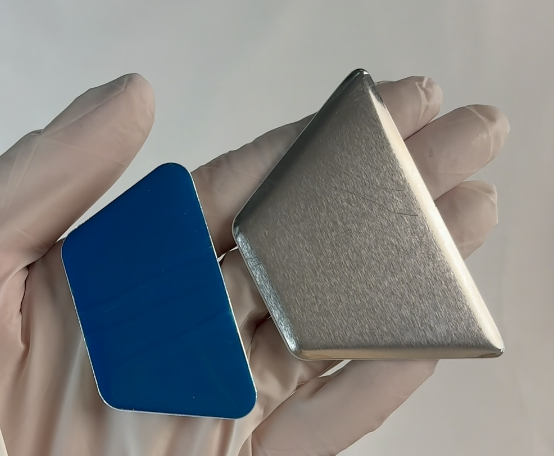
Why Premium External Nasal Splints Form the Backbone of Effective Rhinoplasty Post-Operative Care and Smart Hospital Procurement
1. The Biomechanical Role of External Compression in Preventing Subcutaneous Fluid Accumulation
In the immediate hours following an aggressive septorhinoplasty, the delicate soft tissue envelope of the nose becomes a hotbed for interstitial fluid shifts. Surgical trauma inevitably disrupts local lymphatic and venous drainage, leading to pronounced edema that can obscure the surgical result and distress the patient. Implementing a rigorous protocol for rhinoplasty post-operative care demands an external barrier capable of delivering uniform, continuous hydrostatic pressure across the nasal dorsum.
By applying a precisely engineered external nasal splint, clinicians establish an external mechanical counter-pressure that limits capillaries from leaking plasma into the surrounding subcutaneous tissues. This structural compression effectively curtails the severity of the initial inflammatory spike. Unlike traditional plaster wraps that loosen as swelling subsides, modern multi-layer splints adapt to the changing contours of the nasal bridge, ensuring that the downward force remains consistent throughout the critical 72-hour post-surgical window.
2. Mitigating Graft Displacement and Ensuring Structural Alignment Against Mechanical Forces
The long-term aesthetic and functional success of a rhinoplasty relies heavily on the precise positioning of internal structures, including delicate septal extensions, spreader grafts, and osteotomy segments. During the early phases of wound healing, these components are highly vulnerable to displacement caused by involuntary patient actions such as smiling, talking, sneezing, or rolling over during sleep. A robust external nasal splint acts as a rigid exoskeleton, absorbing these micro-shocks and neutralizing lateral forces that threaten to shift the nasal bones out of alignment.
When compared to flimsy, non-reinforced medical tapes or generic elastic bandages, a specialized splint featuring a malleable aluminum backing provides superior rigidity without compromising patient comfort. This rigid top layer ensures that the underlying cartilaginous and bony framework remains strictly immobilized in the exact position determined by the surgeon. For clinical teams, this dependable immobilization translates to a dramatic reduction in accidental post-op asymmetry, minimizing the need for costly secondary revision surgeries.
3. Eradicating Subcutaneous Dead Space to Prevent Hematoma and Fibrous Tissue Overgrowth
One of the most critical yet frequently overlooked challenges in post-surgical nasal management is the management of “dead space.” When a surgeon elevates the skin-soft tissue envelope to reshape the underlying bone and cartilage, a structural void is created between these uncoupled layers. If this dead space is not aggressively managed during rhinoplasty post-operative care, it rapidly fills with blood or serous fluid, creating an ideal environment for hematoma formation, localized infection, or the proliferation of irregular granulation tissue.
To combat this, the advanced splint utilizes a high-performance 3M™ adhesive base combined with a compressible foam core to lock the skin down tightly against the newly sculpted nasal framework. This intimate tissue adaptation encourages rapid revascularization and promotes natural skin retraction. By ensuring that the dermal layer adheres smoothly and uniformly to the underlying cartilage, the splint prevents the formation of thick, fibrotic scar tissue under the skin, which could otherwise distort a refined supratip break or a sharp nasal tip definition.
4. Advanced Material Architecture: Malleable Aluminum, Breathable Foam, and Hypoallergenic Adhesives
The therapeutic efficacy of a modern nasal splint for recovery is a direct result of its sophisticated three-layer material composition. The outermost layer consists of a highly malleable aluminum backing that allows surgeons to easily mold the splint to the unique dorsal profile of each patient directly in the operating room. This is paired with a middle layer of breathable, medical-grade foam cushion that acts as a pressure-distributing buffer, preventing localized skin necrosis over prominent bony areas while allowing heat and moisture to escape.
The foundational layer relies on a premium, hypoallergenic 3M™ adhesive that ensures the device remains firmly anchored to the skin, even when exposed to natural facial oils or post-operative sweat. Traditional fixation methods often suffer from adhesive degradation, requiring frequent re-applications that disturb the healing wound bed. By leveraging a skin-friendly, moisture-resistant adhesive interface, these splints eliminate the risk of premature peeling, protecting the surgical site from external contaminants and maintaining a sterile, secure environment.
5. Optimizing Clinical Workflows and Enhancing Wound Edge Tension Reduction
From a practical nursing and hospital operations standpoint, the choice of post-operative dressings deeply impacts daily workflow efficiency. Traditional nasal packing and complex multi-layered taping methods are notoriously time-consuming to apply, require specialized handling, and place a heavy burden on post-anesthesia care unit (PACU) staff. Implementing an all-in-one, pre-fabricated external nasal splint streamlines the post-operative dressing routine into a fast, highly reproducible procedure that takes under a minute to execute.
Furthermore, when managing patients who have undergone concurrent alar base reductions or columellar incisions, managing horizontal skin tension is paramount for scar optimization. The high elasticity and precise fit of these modern splints distribute skin tension away from the fresh incision lines, reducing the mechanical pull on closing sutures. This tension-shielding property accelerates epithelialization, lowers the risk of wound dehiscence, and ultimately yields flatter, narrower, and cosmetically superior scars that satisfy both patients and surgeons.
6. Financial and Operational Advantages of Wholesale Sourcing for Aesthetic Clinics
For procurement officers managing inventory across busy plastic surgery centers and ENT clinics, balancing clinical excellence with cost containment is an ongoing challenge. Relying on fragmented, brand-name retail post-op supplies quickly inflates per-case material costs. Transitioning to wholesale medical nasal splints allows healthcare facilities to standardize their recovery protocols while benefiting from substantial volume-based cost reductions.
Beyond direct material savings, the long-term operational dividends are substantial. Because these specialized splints offer superior breathability via integrated mesh designs, patients can comfortably wear them for extended periods without developing the severe skin maceration or pruritus commonly associated with cheaper, occlusive vinyl dressings. Reducing these dermatological complications slashes the volume of unscheduled, anxious post-operative follow-up visits, allowing clinical staff to dedicate their time to new patient consultations and high-revenue surgical procedures.
📚 References
- American Academy of Otolaryngology–Head and Neck Surgery (AAO-HNS): Clinical Practice Guideline: Improving Nasal Form and Function after Rhinoplasty.
- European Position Paper on Rhinosinusitis and Nasal Polyps (EPOS): Standards for Post-Surgical Care and Biomaterial Applications in Nasal Reconstructive Procedures.
- Journal of Plastic, Reconstructive & Aesthetic Surgery: The Evaluation of External Splinting Mechanisms on Soft-Tissue Edema Control Following Open Rhinoplasty.
- PubMed Central (PMC): Comparative Analysis of Medical-Grade Adhesives and Structural Splints in Preventing Graft Displacement in Revision Septorhinoplasty.