
Balancing Patient Comfort, Clinical Efficacy, and Hospital Cost-Efficiency Through Innovative Biomaterial Selection
1. Redefining Postoperative Care with Non-Adherent Biomaterials
The management of epistaxis and postoperative recovery following rhinologic procedures has historically depended heavily on traditional cotton gauze strips. While functional, these conventional options present significant clinical hurdles, particularly during removal. When raw, bleeding mucosal surfaces heal around coarse fibers, removing the packing often disrupts the fragile newly formed clot, inducing secondary hemorrhage and intense patient pain. Modern rhinology increasingly favors advanced Polyvinyl Alcohol (PVA) expanded sponges to mitigate these specific issues. Because PVA features a smooth, interconnected open-cell structure, it functions by absorbing fluids rapidly and expanding to create a uniform, non-adherent barrier against the healing mucosa. This non-adherent surface ensures that the material does not bond with the healing wound bed, facilitating painless dressing changes that protect the delicate nasal mucosa from mechanical trauma. In practice, this means that clinical teams can manage postoperative nasal packing material for septoplasty with greater confidence, reducing the likelihood of rescue interventions for secondary bleeding and improving the overall patient experience in the recovery ward.
2. Maintaining Airway Patency Through Anatomical Venting Solutions
A frequent complaint among patients undergoing bilateral nasal packing is the complete loss of nasal airflow, which leads to mouth breathing, severe dry mouth, sleep disruption, and elevated arterial blood pressure. Traditional packing designs block the nasal passages entirely, adding unnecessary physiological stress during the crucial first 24 to 48 hours post-surgery. To resolve this issue, advanced single use medical sponge for surgical bleeding control configurations incorporate an integral, hollow airway tube running through the center of the PVA structure. This anatomical venting design maintains nasal airway patency even while the sponge is fully expanded and exerting necessary mechanical pressure on the surrounding vasculature. By permitting continuous, unhindered breathing through the nose, this design significantly alleviates the sensation of suffocation often reported by patients. For nursing teams monitoring postoperative recovery in the ENT ward, this structural innovation translates directly into fewer patient complaints, decreased anxiety, and more stable vital signs, demonstrating how a subtle product modification can dramatically elevate the standard of postoperative care.
3. Enhancing Patient Safety with Integral Retrieval Systems
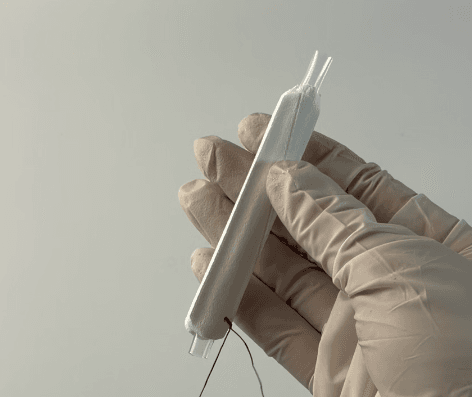
The risk of packing migration, accidental aspiration, or retention of material fragments in the posterior nasal cavity represents a serious safety concern for surgical staff and emergency physicians alike. Fragmented packing or loose fibers not only complicate the extraction process but can also act as a nidus for localized infection or granuloma formation if left behind. Utilizing a hospital disposable nasal dressing material equipped with an integrated, high-tensile safety traction string eliminates these risks. This traction thread is securely anchored through the entire core of the PVA sponge during manufacturing, providing a reliable and continuous pull line for clean, single-piece extraction. During removal, the clinician can apply steady, controlled traction, ensuring that the packing is withdrawn smoothly without leaving microscopic residues or tearing the friable tissue. This mechanism minimizes the risk of mucosal friction and tearing, providing a safer, more predictable procedural workflow whether the extraction takes place in an outpatient clinic, an emergency department, or an ENT specialist’s office.
4. Accelerating Hemostasis in Acute and Surgical Scenarios
When managing severe epistaxis or post-surgical capillary bleeding, the speed of clot formation is directly tied to the prevention of systemic complications and blood loss. Traditional packing strips rely almost exclusively on manual compression, which can be inconsistent and unevenly distributed across irregular anatomical structures like the turbinates and septum. In contrast, premium PVA hemostatic packing cotton functions via a dual-action mechanism: rapid fluid absorption coupled with uniform mechanical compression. Upon contact with blood or saline exudates, the dehydrated PVA sponge swells rapidly, expanding to multiple times its compressed size within seconds to fill the entire nasal cavity. This controlled expansion exerts even, multidirectional pressure on the bleeding sites, while the hydrophilic matrix simultaneously concentrates clotting factors and platelets at the wound interface. This makes it an exceptionally effective emergency epistaxis management device for uncontrolled, stubborn nosebleeds, as well as an essential component for routine hemostasis following turbinectomies, septoplasties, and complex endoscopic sinus surgeries.
5. Optimizing Clinical Workflows Across Diverse Medical Departments
The utility of advanced hemostatic packing extends far beyond the specialized ENT operating theater, serving as a versatile asset across multiple hospital departments. In high-pressure environments like the Emergency Room (ER) or Intensive Care Units (ICU), clinicians routinely encounter acute epistaxis caused by trauma, vascular rupture, or underlying coagulopathies. Having access to a highly predictable, easy-to-insert best absorbable hemostatic sponge for ENT surgery saves critical time when compared to the laborious process of layering traditional petroleum-impregnated gauze. Furthermore, these sponges are highly utilized in outpatient departments for minor minimally invasive interventions, such as the excision of small nasal tumors, polyps, or superficial lesions. The predictable performance of pre-formed, compressed PVA shapes reduces the time required for packing insertion and removal, accelerating patient throughput in out-patient clinics and allowing emergency staff to stabilize patients rapidly without relying on specialized rhinologic equipment or specialized light sources.
6. Analyzing Procurement Metrics and Hospital Cost-Efficiency
From a healthcare administration and procurement perspective, selecting clinical consumables requires a careful balancing of unit cost against total systemic expenditure. While traditional cotton gauze strips carry a very low initial purchase price, their hidden costs can be substantial, stemming from prolonged nursing attention, the management of secondary bleeding complications, and extended hospital stays driven by patient discomfort or adverse events. Transitioning to advanced PVA nasal packing cotton alters this financial calculation favorably by streamlining clinical workflows and reducing post-procedural complications. The reduction in dressing change times frees up valuable nursing hours, while the mitigation of mucosal trauma lowers the need for expensive secondary topical hemostats or emergency physician callbacks. By standardizing a highly reliable, dual-action hemostatic device that reduces patient stay times and improves outpatient turnaround, hospital procurement departments can achieve meaningful cost control while simultaneously elevating the quality of patient care and ensuring compliance with modern clinical efficiency benchmarks.
📚 References
- EPOS Guidelines: European Position Paper on Rhinosinusitis and Nasal Polyps. Section on Postoperative Care and Hemostatic Management in Endoscopic Sinus Surgery.
- AAO-HNS Clinical Practice Guideline: American Academy of Otolaryngology-Head and Neck Surgery Foundation. Clinical Practice Guideline: Nosebleed (Epistaxis).
- PubMed / Peer-Reviewed Literature: Comparison of PVA sponges and traditional packing materials in rhinologic surgery: A evaluation of patient comfort and mucosal healing. Journal of Otolaryngology–Head & Neck Surgery.
Discover how PVA Hemostatic Packing Cotton with an integrated airway tube improves postoperative recovery, enhances hemostasis, maintains nasal breathing, and reduces patient discomfort in ENT procedures.
1. What Is PVA Hemostatic Packing Cotton?
PVA Hemostatic Packing Cotton is an advanced absorbent nasal dressing widely used in otolaryngology (ENT) departments for postoperative nasal cavity support, compression hemostasis, and wound protection.
Unlike traditional gauze strips, PVA Hemostatic Packing Cotton is manufactured from highly purified medical-grade polyvinyl alcohol (PVA) foam. The material features a uniform microporous structure that rapidly absorbs blood and secretions while providing gentle, evenly distributed pressure to surrounding tissues.
The addition of an integrated hollow airway tube allows patients to maintain nasal airflow even while the nasal cavity is packed, significantly improving postoperative comfort and reducing breathing difficulties.
2. Key Features and Advantages
2.1 Non-Adherent Design for Less Painful Dressing Removal
One of the most significant challenges with traditional nasal gauze packing is tissue adhesion. As healing progresses, gauze may stick to the wound surface, causing bleeding and pain during removal.
PVA Hemostatic Packing Cotton offers a soft and smooth structure that minimizes adherence to delicate nasal mucosa. During removal, the packing can typically be extracted with less trauma to the surgical site, helping reduce patient discomfort and supporting better wound healing.
Benefits include:
- Reduced pain during dressing changes
- Lower risk of secondary bleeding
- Protection of newly formed tissue
- Improved patient experience
2.2 Integrated Airway Channel Maintains Nasal Breathing
Traditional nasal packing often completely obstructs airflow, forcing patients to breathe through the mouth. This can lead to:
- Dry mouth
- Sleep disturbances
- Increased anxiety
- Reduced postoperative comfort
The built-in hollow airway tube creates a dedicated ventilation channel through the center of the packing material, helping maintain nasal airflow during the healing process.
Clinical advantages include:
- Improved patient comfort
- Reduced sensation of nasal obstruction
- Better sleep quality after surgery
- Enhanced postoperative recovery experience
2.3 One-Piece Retrieval String for Clean and Safe Removal
The product features an integrated retrieval string securely attached to the packing material.
This one-piece design allows healthcare professionals to remove the dressing efficiently and completely, reducing the risk of residual fragments remaining inside the nasal cavity.
Advantages include:
- Complete removal without residue
- Reduced risk of retained foreign material
- Simplified postoperative management
- Protection of nasal mucosal tissues
2.4 Superior Hemostatic Performance Compared with Traditional Gauze
The unique porous structure of PVA enables rapid fluid absorption and expansion after contact with blood.
As the material expands, it exerts uniform compression against surrounding tissues, helping stabilize blood clots and control bleeding more effectively than conventional gauze strips.
Key hemostatic benefits:
- Rapid blood absorption
- Uniform compression pressure
- Effective postoperative bleeding control
- Reduced need for repeated interventions
For many ENT procedures, PVA Hemostatic Packing Cotton has become a preferred alternative to traditional ribbon gauze due to its balance of hemostatic effectiveness and patient comfort.
3. Clinical Applications
3.1 Postoperative Packing Following ENT Surgery
PVA Hemostatic Packing Cotton is commonly used after various otolaryngology procedures, including:
- Septoplasty (nasal septum correction)
- Functional Endoscopic Sinus Surgery (FESS)
- Turbinate reduction surgery
- Nasal hemorrhage surgery
- Nasal reconstruction procedures
The packing provides compression hemostasis while supporting tissue stabilization during the early healing phase.
3.2 Management of Traumatic Epistaxis
Acute nasal bleeding caused by:
- Facial trauma
- Sports injuries
- Nasal vessel rupture
- Accidental impacts
can often require immediate packing to achieve rapid hemostasis.
PVA Hemostatic Packing Cotton expands after absorbing blood, providing effective pressure against bleeding vessels and helping control severe epistaxis.
3.3 Outpatient Minimally Invasive Procedures
Following office-based procedures such as:
- Nasal polyp excision
- Minor nasal lesion removal
- Endoscopic biopsy
PVA Hemostatic Packing Cotton can be used to provide temporary wound compression and bleeding control.
3.4 Emergency Nasal Hemorrhage Management
In emergency departments, uncontrolled epistaxis may require immediate intervention.
PVA Hemostatic Packing Cotton offers:
- Rapid deployment
- Reliable compression
- Effective hemostasis
- Improved patient tolerance
making it a valuable emergency treatment option.
3.5 Temporary Hemostasis for Minor ENT Wounds
The product may also be used for temporary compression and bleeding control of superficial wounds in selected ENT and facial procedures.
4. Comparison: PVA Hemostatic Packing Cotton vs Traditional Gauze Packing
| Feature | PVA Hemostatic Packing Cotton with Airway Tube | Traditional Gauze Packing |
|---|---|---|
| Hemostatic Effect | Excellent | Moderate |
| Patient Comfort | High | Lower |
| Nasal Breathing | Maintained via airway tube | Usually blocked |
| Tissue Adhesion | Minimal | More common |
| Removal Pain | Reduced | Often greater |
| Residue Risk | Very low | Possible |
| Postoperative Experience | Improved | Less comfortable |
5. Benefits for Healthcare Providers and Hospitals
For ENT surgeons, nurses, and healthcare facilities, PVA Hemostatic Packing Cotton offers several operational advantages:
- Streamlined postoperative care
- Reduced dressing-change discomfort
- Improved patient satisfaction
- Efficient bleeding management
- Simplified packing removal process
- Enhanced clinical workflow
As healthcare systems increasingly focus on patient-centered care, advanced nasal packing materials can contribute to improved treatment experiences and better postoperative outcomes.
6. Conclusion
PVA Hemostatic Packing Cotton with an integrated airway tube represents a modern advancement in nasal hemostasis and postoperative ENT care.
By combining effective bleeding control, atraumatic removal, continuous nasal airflow, and enhanced patient comfort, this innovative solution addresses many limitations associated with traditional gauze packing.
Whether used after ENT surgery, for traumatic epistaxis, outpatient procedures, or emergency bleeding control, PVA Hemostatic Packing Cotton provides clinicians with a reliable and patient-friendly option for nasal cavity management.
References
- American Academy of Otolaryngology–Head and Neck Surgery (AAO-HNS) Clinical Resources.
- European Position Paper on Rhinosinusitis and Nasal Polyps (EPOS).
- World Health Organization (WHO) – Surgical Safety and Postoperative Care Guidelines.
- Journal of Otolaryngology–Head & Neck Surgery publications on nasal packing and epistaxis management.
- International Forum of Allergy & Rhinology – Evidence-based recommendations for postoperative nasal care.