

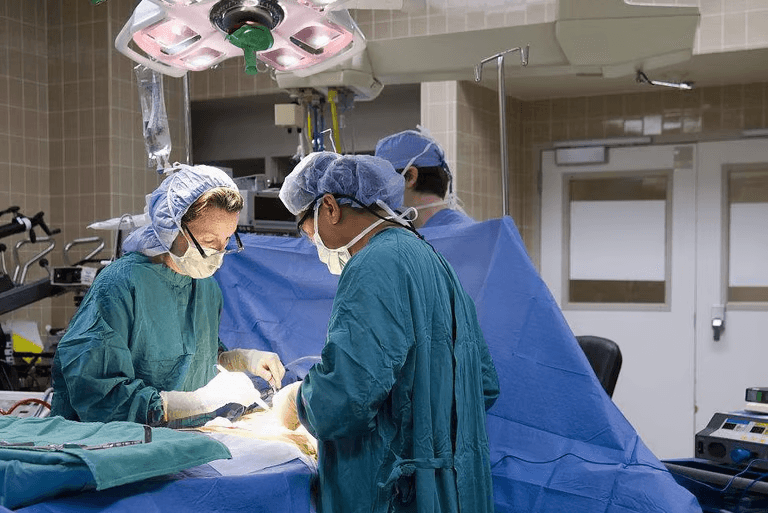
A comprehensive overview of optical design, illumination uniformity, and clinical performance in modern operating room lighting systems
Introduction
Surgical shadowless lamps, also known as operating lights, are essential devices in modern operating rooms, designed to provide consistent, high-intensity illumination without casting disruptive shadows. Their working principle integrates optical engineering, light source technology, and ergonomic design to ensure optimal visibility for surgeons while minimizing eye fatigue and tissue distortion.
1. Multi-Source Illumination and Shadow Elimination
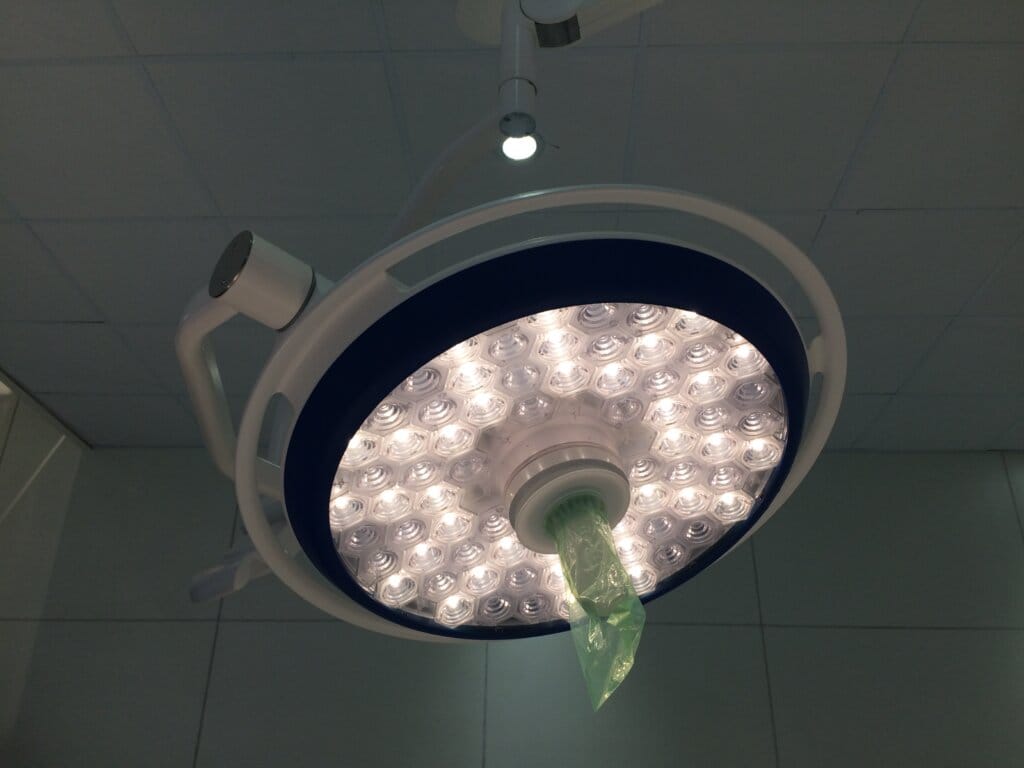
The core principle of shadowless lamps lies in the use of multiple light sources arranged in a circular or multi-panel configuration. Each individual light beam overlaps at the surgical field, effectively compensating for shadows created by surgical instruments or personnel.
When an object blocks part of the light, other beams from different angles continue to illuminate the same area, reducing or eliminating shadows. According to international clinical lighting standards (such as IEC 60601-2-41), high-quality surgical lights can achieve shadow dilution levels exceeding 90%, ensuring uninterrupted visualization during complex procedures.
2. Optical Focusing and Uniform Light Distribution
Surgical lamps utilize advanced optical systems, including reflectors or lens arrays, to focus light precisely on the surgical site. These systems are engineered to produce a homogeneous light field with consistent intensity across the illuminated area.
Modern LED-based systems employ computer-designed free-form lenses that optimize beam convergence, reducing hotspots and ensuring uniform illumination. This is particularly critical in microsurgery and neurosurgery, where lighting precision directly impacts surgical accuracy and outcomes.
3. Color Rendering and Tissue Differentiation
Accurate color reproduction is essential for distinguishing between different tissue types, blood vessels, and pathological structures. Surgical lights are designed with a high Color Rendering Index (CRI), typically above 90, closely mimicking natural daylight.
Advanced systems also allow adjustable color temperature (usually between 3,500K and 5,500K), enabling surgeons to tailor lighting conditions based on the procedure. Recent clinical studies (2023–2025) have shown that optimized lighting parameters significantly improve visual clarity and reduce fatigue during prolonged operations.
4. Heat Management and Patient Safety
Traditional halogen lamps generated significant heat, which could lead to tissue drying and discomfort for both patients and surgical staff. Modern shadowless lamps, particularly those using LED technology, emit minimal infrared radiation.
Integrated heat management systems, including passive cooling structures and optimized airflow, help maintain a stable operating temperature. This reduces the risk of surgical field contamination caused by air convection and enhances overall patient safety.
5. Ergonomic Design and Workflow Optimization
Contemporary surgical lighting systems incorporate ergonomic structures and intelligent controls to improve usability. Features such as adjustable intensity, focus diameter, and flexible positioning arms allow precise adaptation to different surgical scenarios.
In addition, workflow optimization in the operating room increasingly emphasizes efficiency and infection control. For example, the use of disposable surgical accessories can significantly reduce the burden on Central Sterile Supply Departments (CSSD). Our company provides disposable surgical light handle covers (shadowless lamp protective covers), which eliminate the need for repeated cleaning, disinfection, and sterilization cycles. This not only simplifies compliance with infection control protocols but also reduces turnaround time, minimizes workload for healthcare staff, and enhances overall operational efficiency.
Conclusion
The working principle of surgical shadowless lamps is based on multi-angle illumination, precision optical focusing, and high-fidelity color rendering, supported by effective thermal management and ergonomic design. These technologies address key clinical challenges such as shadow interference, uneven lighting, and operator fatigue.
Furthermore, integrating disposable protective solutions into operating room practice represents an important advancement in workflow efficiency and infection control. By reducing reliance on sterilization processes and simplifying equipment handling, healthcare facilities can improve both safety and productivity, ultimately contributing to better surgical outcomes.