

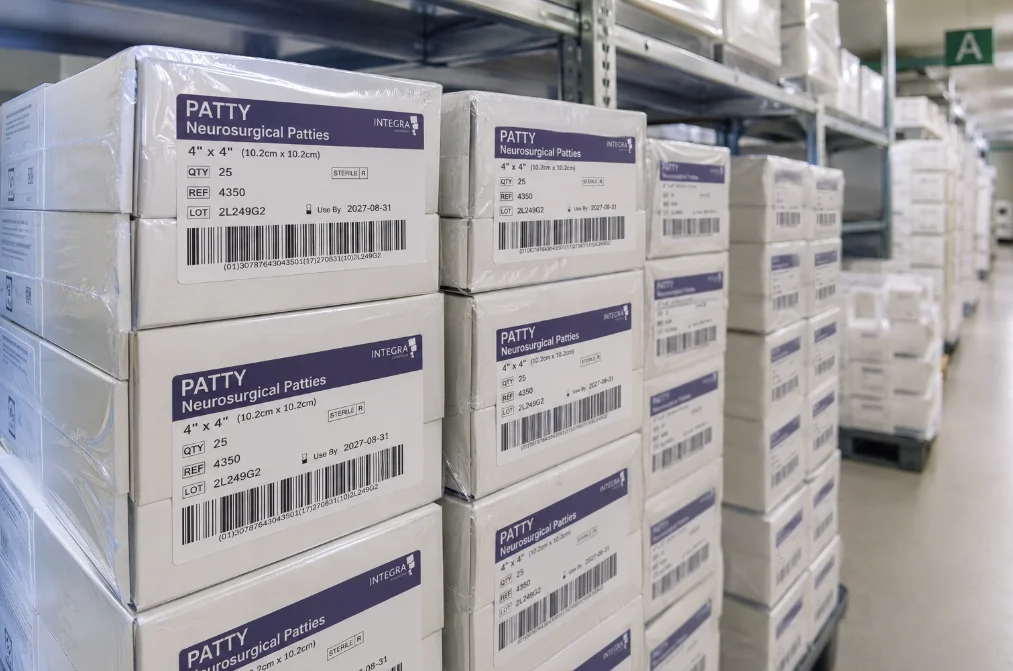
Navigating the Current Neuro Sponge Supply Disruption via Resilient Hospital Procurement Frameworks and Validated Alternative Sourcing
1. Deciphering the Root Causes of Current Neurosurgical Sponge Supply Disruptions
In contemporary surgical supply chain management, sudden bottlenecks in highly specialized single-use consumables present an immediate threat to elective and emergency surgeries alike. Recent industry shifts have exposed severe vulnerabilities regarding the widespread disruptions in availability of neurosurgical patties. This critical shortage of surgical neuro patties is not a simple logistical delay. It stems from a combination of strict regulatory actions, manufacturing bottlenecks, and an over-reliance on a small pool of legacy medical device conglomerates.
When examining what causes neurosurgical patties supply shortages, we must look at the highly specialized production lines required to manufacture these devices. Unlike basic general surgery lap sponges, a medical-grade neuro sponge requires precise raw material purification, sophisticated needle-punching or non-woven bonding technologies, and automated laser-cutting systems to guarantee perfectly smooth edges.
Because the global market is heavily consolidated among a few key entities, any regulatory halt or production line failure at a single major facility can spark a worldwide neurosurgical sponge stock out. When a primary factory faces unexpected downtime or fails a sterile compliance inspection, hospital networks that rely solely on just-in-time inventory models find their operating rooms facing limited availability of neuro surgical patties within weeks.
2. Analyzing the Regulatory Landscape: FDA Warnings and the Codman Recall Impact
The regulatory oversight of neurosurgical consumables has intensified significantly following high-profile quality failures. A primary driver behind the recent neuro sponge supply chain issues was the major compliance actions taken against legacy market leaders. Specifically, a Class 2 device recall affecting Codman surgical patties created massive ripples across hospital networks globally. The Integra Codman surgical patties recall—and related MDA recall actions—forced hospital procurement teams to immediately pull thousands of sterile units from their active inventory shelves.
This massive disruption was further underscored when regulatory authorities released an official FDA medical device letter regarding neurosurgical sponges availability. These formal warnings typically occur when inspectors discover that a manufacturer’s quality control systems failed to prevent issues like compromised sterile packaging barriers, inconsistent barium sulfate radiopaque thread bonding, or excessive fiber shedding.
When an FDA warns of neurosurgical supply disruptions, it serves as an urgent wake-up call for clinical leaders. These recalls mean that operating rooms cannot simply burn through existing stock; they must immediately quarantine affected lots of cottonoid neurosurgical patties to prevent catastrophic surgical errors, forcing an abrupt reliance on alternative manufacturers.
3. Clinical Risks Associated with Sub-Standard Alternatives and Structural Failures
When a hospital experiences an acute neuro sponge shortage, the temptation to source unverified, low-cost alternatives can introduce severe clinical complications. In the delicate field of neurosurgery, utilizing surgical neuro patties that do not adhere to strict material engineering standards poses direct physical dangers to the patient. Standard general cotton sponges cannot replicate the delicate capillary fluid dynamics required during a craniotomy or spinal decompression.
One of the greatest dangers in the operating room is a high surgical sponge retention compliance risk. Premium radiopaque neurosurgical patties feature a permanently bonded x-ray detectable element. If an unverified alternative utilizes a poorly integrated or plain vs radiopaque neuro patties design, the risk of a retained neuro sponge surgical risk spikes dramatically.
Furthermore, sub-par alternatives frequently exhibit poor structural integrity when saturated with blood or cerebrospinal fluid. Cheaply made neuro patties sponges and strip devices can experience delamination or fiber shedding, leaving microscopic lint behind on the cerebral cortex. This lint can trigger foreign body granulomas, localized tissue inflammation, or chronic post-operative adhesions, completely undermining the meticulous work of the neurosurgical team.
+------------------------------------+-----------------------------------------------+
| Material Defect in Sub-par Patties | Direct Clinical / Operational Consequence      |
+------------------------------------+-----------------------------------------------+
| Delamination / Fiber Shedding      | Microscopic linting, foreign body granulomas   |
| Faulty Locator String Bonding      | Intraopperative detachment, delayed O.R. counts |
| Weak Radiopaque Thread Integration  | High risk of retention, post-op imaging errors|
+------------------------------------+-----------------------------------------------+
4. Cross-Brand Comparison and the Strategic Shift to Emerging Manufacturers
For many years, hospital preference cards were dominated by a handful of proprietary names, most notably Codman surgical patties, Medtronic neuro pattie sponges, and American Surgical Delicot neurosurgical patties. These legacy brands established deep clinical trust through decades of predictable performance. However, the modern supply chain crisis has proven that relying on a single vendor’s Ray-Cot neurosurgical pattie or Uniqcot neuro pattie lines exposes an institution to immense structural vulnerability.
To mitigate these risks, progressive healthcare networks are actively expanding their vendor matrices to include high-capacity, emerging manufacturers, particularly those utilizing advanced production hubs in China. Historically, some procurement teams hesitated to transition away from legacy Western brands due to concerns over material consistency across different sizes of neurosurgical patties.
Today, top-tier international manufacturers have closed this gap by implementing fully automated quality management systems certified under ISO 13485. These emerging suppliers offer sterile neurosurgical sponges that match the precise thickness, high fluid absorption capacity, and robust tensile strength of legacy options. By approving these alternative brands for hospital procurement neurosurgical patties, medical centers can insulate their operating suites from sudden stockouts while achieving substantial cost efficiencies.
5. Institutional Supply Chain Management and O.R. Stock Optimization
Mitigating a prolonged neurosurgical sponge supply disruption requires a fundamental shift away from reactive purchasing toward proactive inventory resilience. Hospital procurement teams must collaborate directly with O.R. material managers to implement advanced operating room sponge stock management protocols. The goal is to establish a robust safety stock buffer that can sustain the surgical center’s caseload for a minimum of 90 to 120 days during a market crisis.
What we often see in hospitals is an inefficient distribution of consumable inventory. A surgical center might have an overabundance of micro-sized patties but face a total depletion of larger, tissue-retracting neuro sponge strips for neurosurgery use. Procurement managers should utilize data-driven inventory software to track exact usage patterns by procedure type.
By streamlining the inventory to focus on the most versatile, high-demand dimensions, hospitals can reduce waste and negotiate more favorable bulk-pricing contracts with alternative neurosurgical patties manufacturers. Diversifying the supply line across multiple validated vendors ensures that if one manufacturer faces an unexpected regulatory halt, the secondary supplier can automatically absorb the excess demand without interrupting the surgical calendar.
6. Comprehensive FAQ: Navigating Alternatives, Recalls, and Compliance Boundaries
What options do surgical teams have when traditional neuro sponges are unavailable?
When primary brands face long-term stockouts, surgical centers must look toward validated surgical center neuro sponge alternatives. This involves conducting rapid clinical evaluations of alternative manufacturers that possess active FDA clearances and CE markings. It is critical to ensure that any substitute product utilizes identical or superior non-woven synthetic fibers (such as medical-grade rayon) to match the fluid dynamics and non-adherent properties that the surgical staff expects.
Why did the FDA issue an official letter about neurosurgical sponges availability?
The FDA issued a letter about neurosurgical sponges availability because localized manufacturing failures and subsequent large-scale product recalls threatened to cause widespread shortages in a critical device category. Because neurosurgical patties are classified as essential items for preserving neurological safety during complex cranial surgeries, the regulatory body deemed it necessary to warn healthcare providers so that institutions could proactively source alternatives before emergency trauma cases were negatively impacted.
How do premium manufacturers mitigate neurosurgical patties adhesion damage?
Premium manufacturers incorporate advanced hydrophilic surface treatments and tightly bound synthetic fiber matrix technologies to ensure their patties maintain an ultra-smooth contact boundary. This deliberate material engineering is essential for neurosurgical patties adhesion damage mitigation. It prevents the sponge from embedding itself into drying neural structures, allowing the surgeon to easily lift the pad away from sensitive cortical tissues without causing secondary micro-tears or microvascular hemorrhaging.
📚 References
- U.S. Food and Drug Administration (FDA): Medical Device Recalls database and official safety communications regarding Class 2 device recall actions for neurosurgical consumables.
- American Association of Neurological Surgeons (AANS): Joint statements on intraoperative safety, device tracking compliance, and the prevention of retained foreign bodies during major craniotomy procedures.
- Journal of Neurosurgery (JNS): Clinical studies evaluating foreign body tissue reactions, granuloma formations, and microscopic linting risks associated with varying surgical sponge material compositions.
- ISO 13485 Standards Certification: International regulatory frameworks governing the quality management and sterile manufacturing processing of single-use surgical devices.